Turkey's First Space Travelers Alper Gezer Avcı and Tuva Cihangir Atasever participated in the training of UYNA and UzMAn experiments, which will be carried out during the 14-day space mission on the International Space Station (ISS).
The meeting held on June 12, 2023 within the scope of the experimental training program was chaired by Prof. Dr. Ahmet Yozgatlıgil, TÜBİTAK MAM Vice President.
Prof. Dr. Ahmet Yozgatlıgil delivered the opening speech at the meeting.
Stressing the importance of the experiments to be carried out within the scope of the first Turkish space traveler and science mission project in the 100th anniversary of our Republic, Yozgatlıgil said that in the last 20 years, our country has gained great momentum in space studies. Space studies, which used to be a symbol of technology race and competition, have now become an integral part of our daily lives and have become an indispensable tool in the realization of economic, scientific, political and social goals. By contributing to research, development, education and innovation, space supports economic growth, provides highly qualified employment opportunities, enhances quality of life, and offers benefits in areas such as nature conservation and disaster management. We are proud to take part as TÜBİTAK MAM in these experiments, which will be carried out in a microgravity environment using the capabilities of the International Space Station (ISS) for the first time in our country. As TÜBİTAK, we are aware of our responsibilities, realize projects of strategic importance for our country, and carry out studies in critical areas that will serve all of Turkey."
"With our UYNA project, the ELF infrastructure of the Japanese Space Agency (JAXA) will be used for the first time by Turkish researchers to develop new generation materials. Three new high entropy (HEA) and medium entropy (MEA) alloys developed by TÜBİTAK MAM researchers in different compositions will be melted and solidified using the ELF device for the first time in a microgravity environment. We aim that the results to be obtained will make significant contributions to our country's ability to design its own commercial new generation alloy and develop qualified materials." "With our UzMAn project, we aim to carry out growth and endurance tests of microalgae species adapted to harsh conditions in the world under zero gravity conditions, to examine their metabolic changes, to investigate CO2 capture performance and O2 It is aimed to develop a life support system together with Science Mission partner Boğaziçi University and TÜBİTAK MAM in order to determine production capabilities."
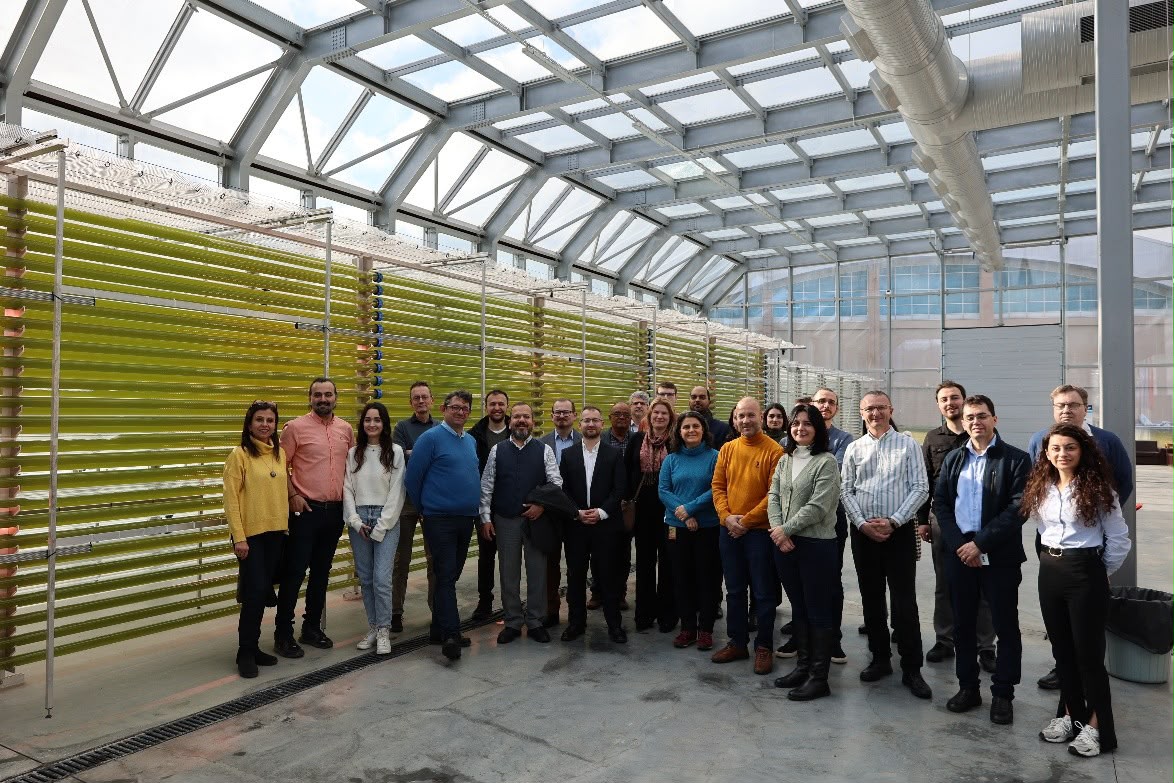
Following the meeting, UYNA and UzMAn experiments were trained at the TÜBİTAK MAM Materials Technologies High Temperature Materials Research, Development and Repair Center of Excellence and Energy Technologies Chemistry Flexible Pilot Plant.
As part of the Science Mission, Turkey's first space travelers Alper Gezer Avcı and Tuva Cihangir Atasever will carry out 13 experiments in different fields such as biology, material science, biotechnology and physics.
The applications to the call published by TÜBİTAK for experiments to be conducted in space were evaluated by a commission consisting of TÜBİTAK, TUA and Axiom Space experts in terms of criteria such as scientific contribution, value, cost, schedule, feasibility and compatibility with International Space Station infrastructures.
Among the 13 experiments selected as a result of the evaluations, there are three experiments belonging to TÜBİTAK Marmara Research Center (MAM): UYNA (New Generation Alloys for Space), gMETAL (The Effect of Antigravity Environment on the Dynamics of Solid Phase Particles in a Fluid), and UzMAn (Microalgal Life Support Units for Space Missions).
The experiments to be carried out are expected to contribute to the development of national and international technology, economic development, social welfare with short and long-term potential effects, the world of science and our national technology.
Here are the TÜBİTAK MAM experiments Turkey's first space travelers will conduct:
1. UYNA
Science Mission Statement:
Next Generation Alloys for Space
Experiment Supervisor Institution and Project Manager:
TÜBİTAK MAM - Ömür Can Odabaş (Project Coordinator)
TÜBİTAK MAM - Dr. Hüseyin Aydın (Deputy Project Manager - Simulation Studies, Melting, Characterization)
TÜBİTAK MAM - Dr. Deniz Sultan Aydın (Combustion Tests, Characterization)
TÜBİTAK MAM - Dr. Enver Bülent Yalçın (Mold Design)
TÜBİTAK MAM - Dr. Yasemin Kılıç (Chemical Characterization)
TÜBİTAK MAM - Bülent Bahadır (Melting and Casting)
TÜBİTAK MAM - Sertaç Alptekin (Melting and Casting)
TÜBİTAK MAM - Y. Eng. Lütfi Yakut (Melting and Casting)
TÜBİTAK MAM - Günay Cankurtaran (Mold making)
TÜBİTAK MAM - Fatih Güler (Nanoindentation, Microstructural Characterization)
TÜBİTAK MAM - MSc. Aylin Şahin Kahraman (Microstructural Characterization)
Description of the Experiment:
Medium entropy (MEA) and high entropy (HEA) alloys, which have emerged with the development of new generation alloys, remain popular as candidate materials in many industries such as space, aviation, automotive, energy and medicine.
There are many material properties that are being studied such as high corrosive resistance, radiation resistance, superior coating ability, high temperature strength, superior tribological properties compared to conventional alloys.
Within the scope of this project, new generation alloys designed by the Metallic Materials Technologies Research Group (MMTAG) of the TÜBİTAK MAM Vice Presidency of Materials Technologies (BYMT) will be produced and metallurgically characterized under earth conditions using the vacuum arc melting device (VAM) in TÜBİTAK infrastructure. The melting and solidification of the alloys designed by TÜBİTAK MAM researchers in microgravity environment will be carried out using the ELF device in the KIBO module of the International Space Station (ISS).
The effects of antigravity environment on material properties such as supercooling temperatures, thermophysical properties, solidification behavior and surface tensions during melting and solidification processes will be investigated. At the end of the space traveler's mission, the alloys produced in the ELF device will be characterized within TÜBİTAK MAM BYMT MMTAG. It is aimed to make a significant contribution to our country's ability to develop new generation materials for the space, aviation and defense industries.
2. gME%ZTAL
Science Mission Statement:
Effect of Antigravity on the Dynamics of Solid Phase Particles in a Fluid
Experiment Responsible Institution and Project Manager:
TÜBİTAK MAM - Prof. Dr. İskender Gökalp / Prof. Dr. Ahmet Yozgatlıgil
Description of the Experiment:
The effect of gravity on the creation of a homogeneous mixture between solid particles and the fluid medium under conditions of no chemical reaction will be investigated. Thus, the propulsion systems of spacecraft will be made more efficient.
3. UzMAn
Name of the Science Mission:
Microalgal Life Support Units for Space Missions
Experiment Supervisor Institution and Project Manager:
Boğaziçi University - Dr. Lecturer Prof. Dr. Berat Haznedaroğlu
TÜBİTAK MAM - Dr. Osman Okur
TÜBİTAK MAM - Dr. Elif Ünveren
TÜBİTAK MAM - Dr. Caner Yürüdü
TÜBİTAK MAM - Yük. Eng. Bilge Betül Özçelik
TÜBİTAK MAM - Dr. Tuğba Ceylan
Istanbul Medeniyet University - Prof. Dr. Turgay Çakmak
Boğaziçi University - Doğukan Parlak
Description of the Experiment:
Performing growth and endurance tests of microalgae species adapted to harsh conditions on Earth under zero gravity conditions, examining their metabolic changes, carbon dioxide (CO2) capture performance and oxygen (O2It is aimed to develop a life support system together with Science Mission partner TÜBİTAK MAM in order to determine the production capabilities.
The design and realization of life support units that can meet the routine needs of the crew and other personnel who will take part in the realization of critical projects such as the establishment of Moon and Mars bases in the near future, and that can perform critical processes in spacecraft are of high importance. One of the most important basic needs in space stations and bases is the need for clean air.
Bugün, Dünya atmosferindeki oksijenin %70’lik kısmı okyanuslarda yaşayan mikroalgler ve siyanobakteriler tarafından üretilmektedir. Bunun yanı sıra, membran prosesler karbondioksit zenginleştirme çalışmalarında yüksek verim ve düşük maliyetleri nedeniyle sıklıkla tercih edilmektedir. Bu iki yaklaşımın beraber ele alınacağı bu çalışmada gerçekleştirilmesi planlanan çalışma prosedürünün iki ana aşaması aşağıda sırasıyla listelenmiştir:
- Passing the ambient air of the International Space Station through the membrane module and feeding the cleaned air back to the environment and feeding the carbon dioxide-rich supply air separated in the membrane module to the microfluidic reactor system with algae
- In a microfluidic reactor system, carbon dioxide is converted to oxygen by algae and returned to the ambient air
In this way, the potential of microalgae species that have adapted to the harsh conditions in the microgravity and enriched carbon dioxide conditions of the International Space Station to remove carbon dioxide, which is classified as hazardous waste, to convert it into oxygen, which is a critical need for the crew, and their growth / photosynthetic efficiency potential under these conditions will be determined.
TÜBİTAK MAM will develop membrane technology with its know-how in the field of life support systems, where it has been a solution provider for a long time, especially for the defense and aviation sectors.2O2 will provide Algae to produce.
In the 100th anniversary of our Republic, we continue our work rapidly and we are proud to contribute to our country's space studies.