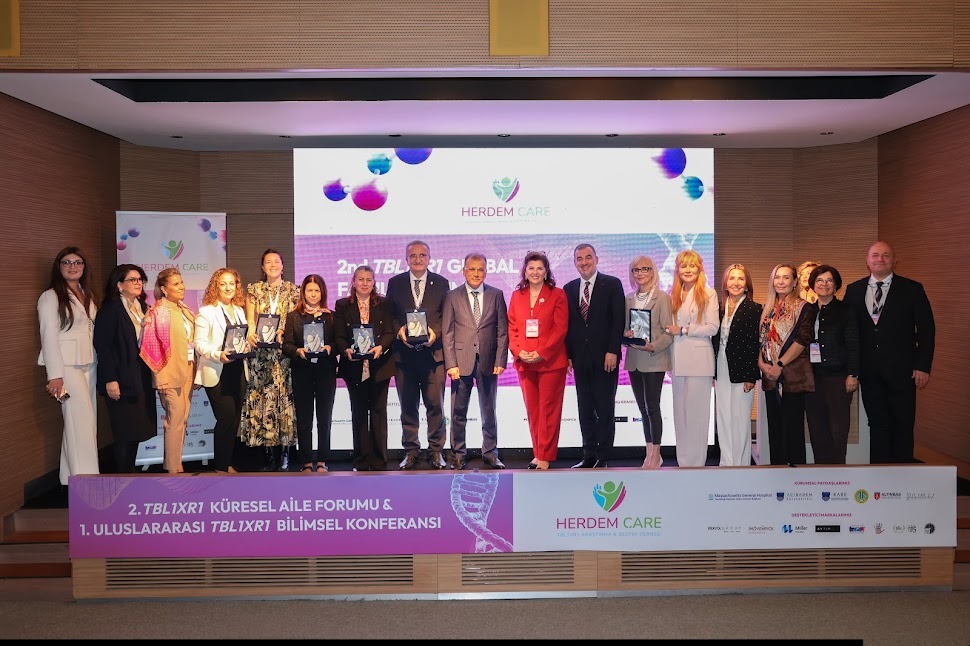
With the aim of establishing a roadmap for research into treatments for ultra-rare neurodevelopmental disorders associated with the TBL1XR1 gene that affect brain development, TÜBİTAK MAM participated in an international conference held in Istanbul with the participation of families of patients and scientists from 10 countries.
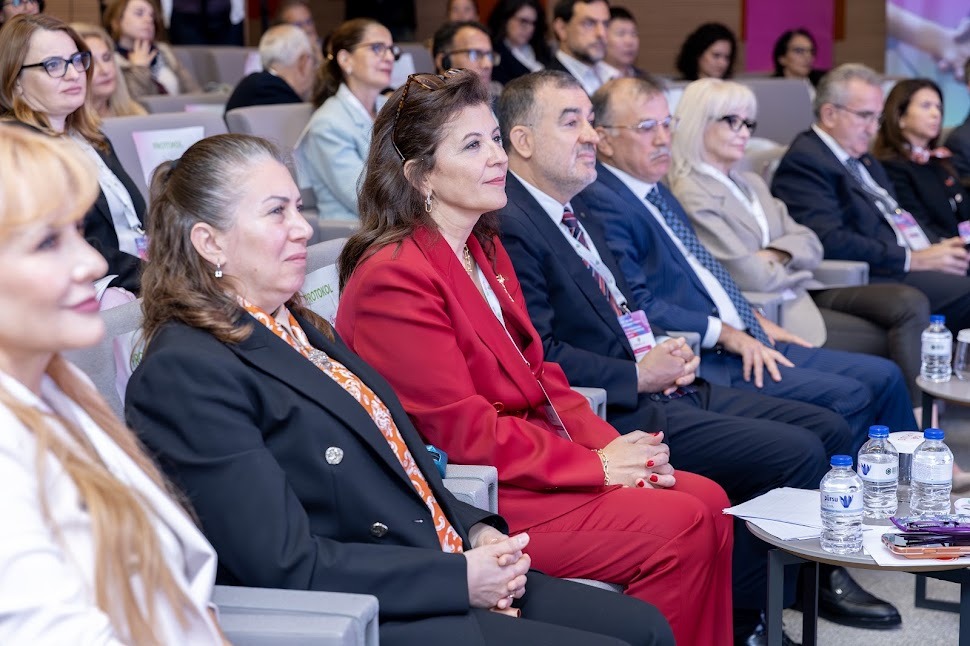
Organized under the leadership of the HERDEM Çare-TBL1XR1 Research and Support Association and hosted by Acıbadem University Maslak Hospital, the “1st International TBL1XR1 Scientific Conference and 2nd TBL1XR1 Global Family Forum”; brought together 17 families from Turkey, Italy, Switzerland, Germany, Australia, the U.S., Ireland, Finland, China, and Malaysia, along with scientists from four continents, in Istanbul. At this international scientific conference—the first of its kind worldwide to focus on the TBL1XR1 genetic disorder—a wide range of scientific studies were discussed, ranging from genetic research to brain organoids, and from genome editing to future gene therapy approaches.
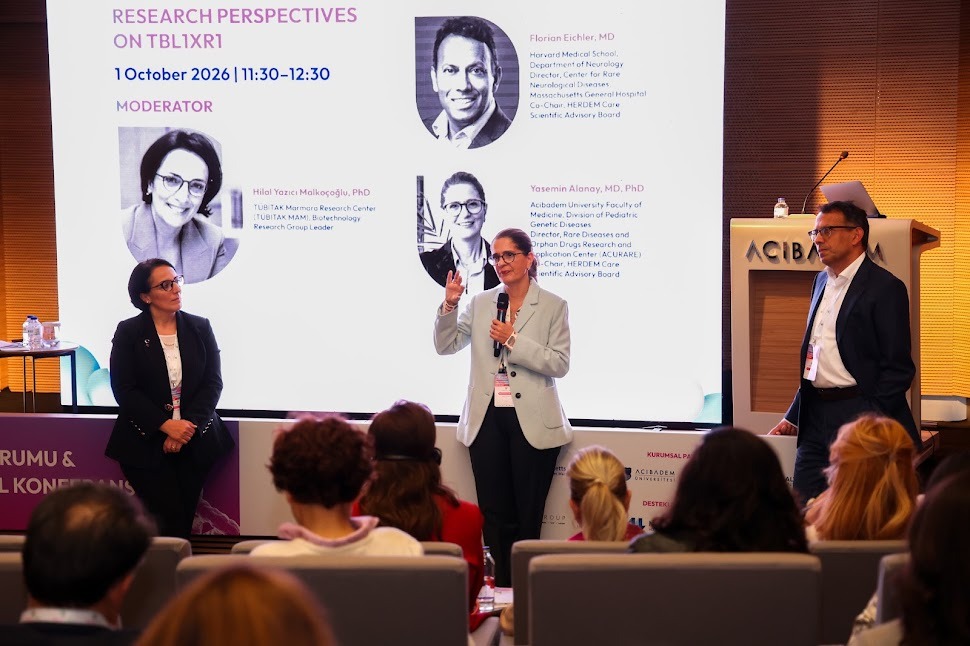
At the opening ceremony of the event, where the work carried out under the Rare Diseases Collaboration Protocol—signed between TÜSEB, Acıbadem University, Altınbaş University, and HERDEM Çare under the auspices of the Turkish Ministry of Health—has been expanded to an international scale, the following attended: Prof. Dr. Burcu Özsoy, President of TÜBİTAK MAM, and Assoc. Prof. Dr. Özgen Ercan, Vice President of Climate and Life Sciences at TÜBİTAK MAM, were in attendance. In the scientific sessions of the event, Assoc. Prof. Dr. Hilal Yazıcı, Leader of the TÜBİTAK MAM Biotechnology Research Group, served as the session moderator.
Scientific Assessments of Treatments by International Researchers Were Discussed
Prof. Dr. Florian Eichler of Harvard Medical School and Massachusetts General Hospital, who led the scientific proceedings of the conference, highlighted the importance of the models developed in TBL1XR1 research and emphasized the need to test candidate compounds and move toward meaningful treatments. Prof. Dr. Yong Cheng from the Center for Translational Neuroscience at Minzu University of China presented findings from ongoing preclinical research, while Prof. Dr. Anna-Katharina Rohlfs from the University of Ulm in Germany discussed speech difficulties associated with the disease and supportive communication methods.
The HERDEM Çare Association, Dr. Ayşegül Altınbaş, stated that families are not merely the subjects of research but also partners in it, and expressed their goal of having the research infrastructure established for TBL1XR1 serve as a model for other rare disease communities. During the program, experts evaluated the challenges children face in daily life—including epilepsy, communication, nutrition, mobility, behavior, sleep, and education—in collaboration with specialists.
Four Key Priorities and Collaborative Working Groups Were Established on the Path to Treatment
At the conference, four key priorities were identified: establishing a shared registry system covering patients worldwide to prepare for future treatment research; conducting a 36-month natural history study; elucidating the relationship between genetic alterations and clinical findings; and preparing for clinical trials. In accordance with the Final Statement, two separate working groups were established in the areas of natural history studies, shared data collection, patient registries, biological samples, and international scientific collaboration.