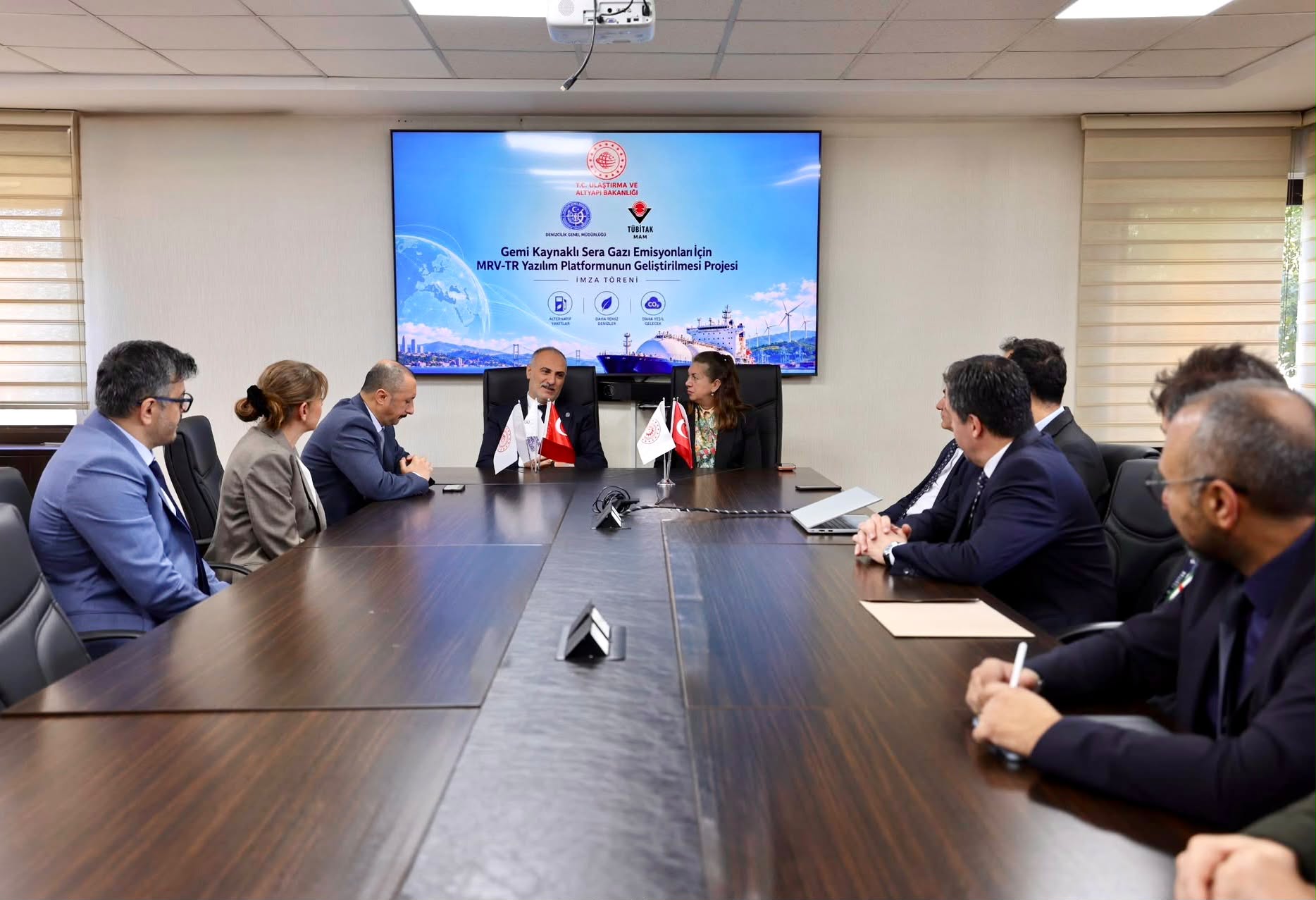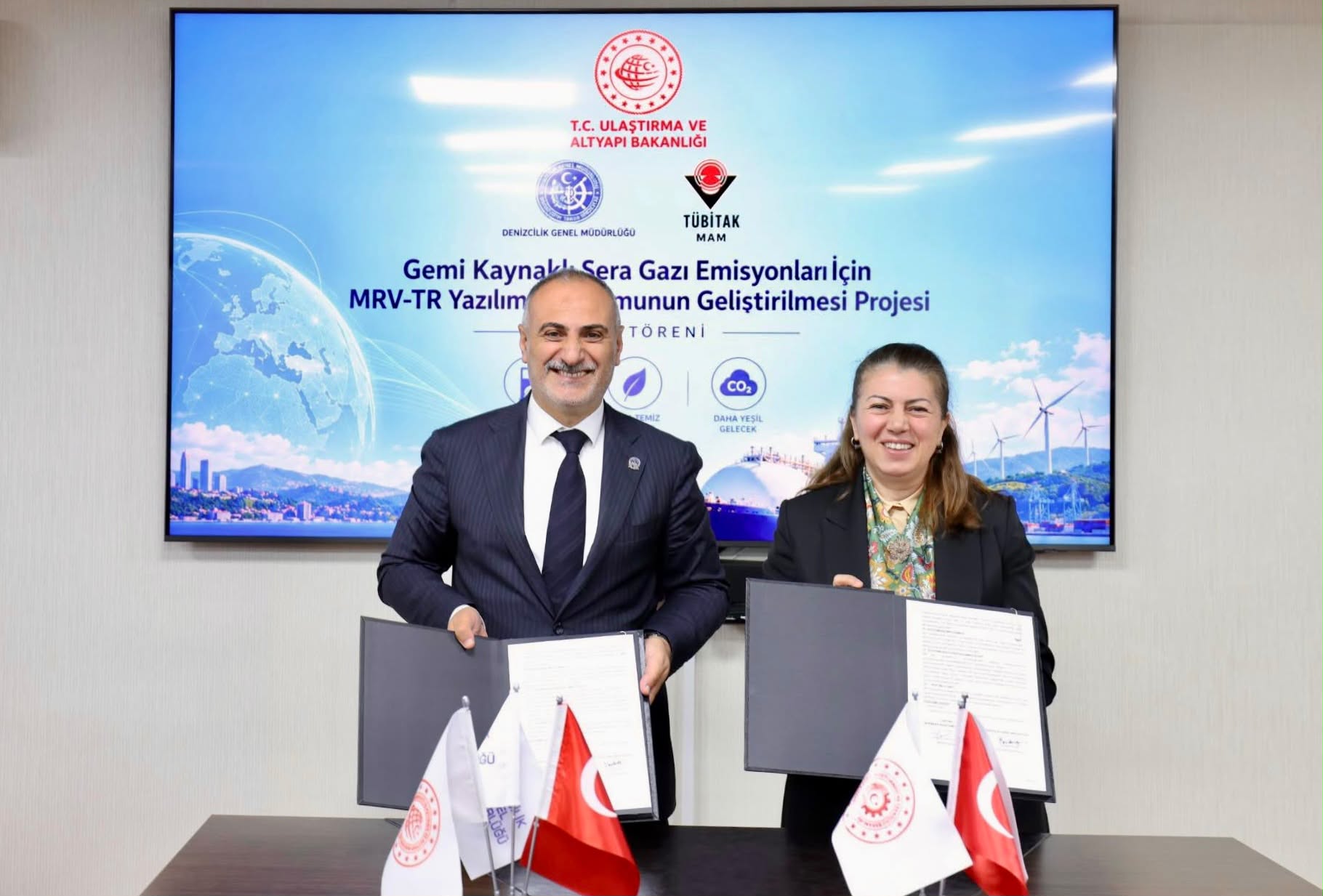
Under a cooperation protocol signed between the General Directorate of Maritime Affairs and TÜBİTAK MAM, a national web-based “MRV-TR Platform” is being developed to digitally monitor, calculate, and report the greenhouse gas emissions of ships calling at Turkish ports.
The General Directorate of Maritime Affairs and the TÜBİTAK Marmara Research Center (MAM) signed an agreement for the “Project to Develop the MRV-TR Platform for Ship-Sourced Greenhouse Gas Emissions.” Launched under a cooperation protocol signed by TÜBİTAK MAM President Prof. Dr. Burcu Özsoy and General Director of Maritime Affairs Ünal Baylan, the project aims to: the project aims to develop a national web platform compliant with European standards to monitor, calculate, and report emission data from ships calling at Turkish ports.
Comprehensive and Digital Emissions Management in the Maritime Industry Using Domestic Software
The project brings together the complementary expertise of the Climate Research and Water Management, Sensor and System Technologies, and Resource Efficiency and Clean Energy research groups within TÜBİTAK MAM. This multidisciplinary effort—which encompasses greenhouse gas emissions inventory preparation, data analytics, software architecture, integration, validation, and decision support capabilities—is ushering in an era of fully domestically developed digital tracking in the maritime sector.
The newly developed MRV-TR Platform integrates with the Port Single Window system to automatically transfer ships’ voyage and port movement data to the system. The platform calculates key greenhouse gas emissions—such as carbon dioxide, methane, and nitrous oxide—from ships, thereby fully digitizing data verification and reporting processes. Designed with role-based access dashboards for companies, verification bodies, and regulatory agencies, the system also includes a simulation infrastructure that enables the comparison of voyage-based emissions and potential financial liabilities with year-end verified data.
The First Field Test Will Be Conducted in Kocaeli
Designed with a modular and scalable architecture, the platform is expected to be completed within 14 months and initially tested in the pilot region in Kocaeli. Following feedback from the field and system improvements, the platform is scheduled to be rolled out for central use across 21 port authorities throughout Turkey by the end of the 18-month project timeline.
This project, which stands out as a significant step toward Turkey’s vision for green shipping and global climate goals, aims to strengthen the sector’s ability to comply with international maritime standards through its digital infrastructure—developed using domestic resources—while contributing to the sector’s decarbonization and sustainable transformation.