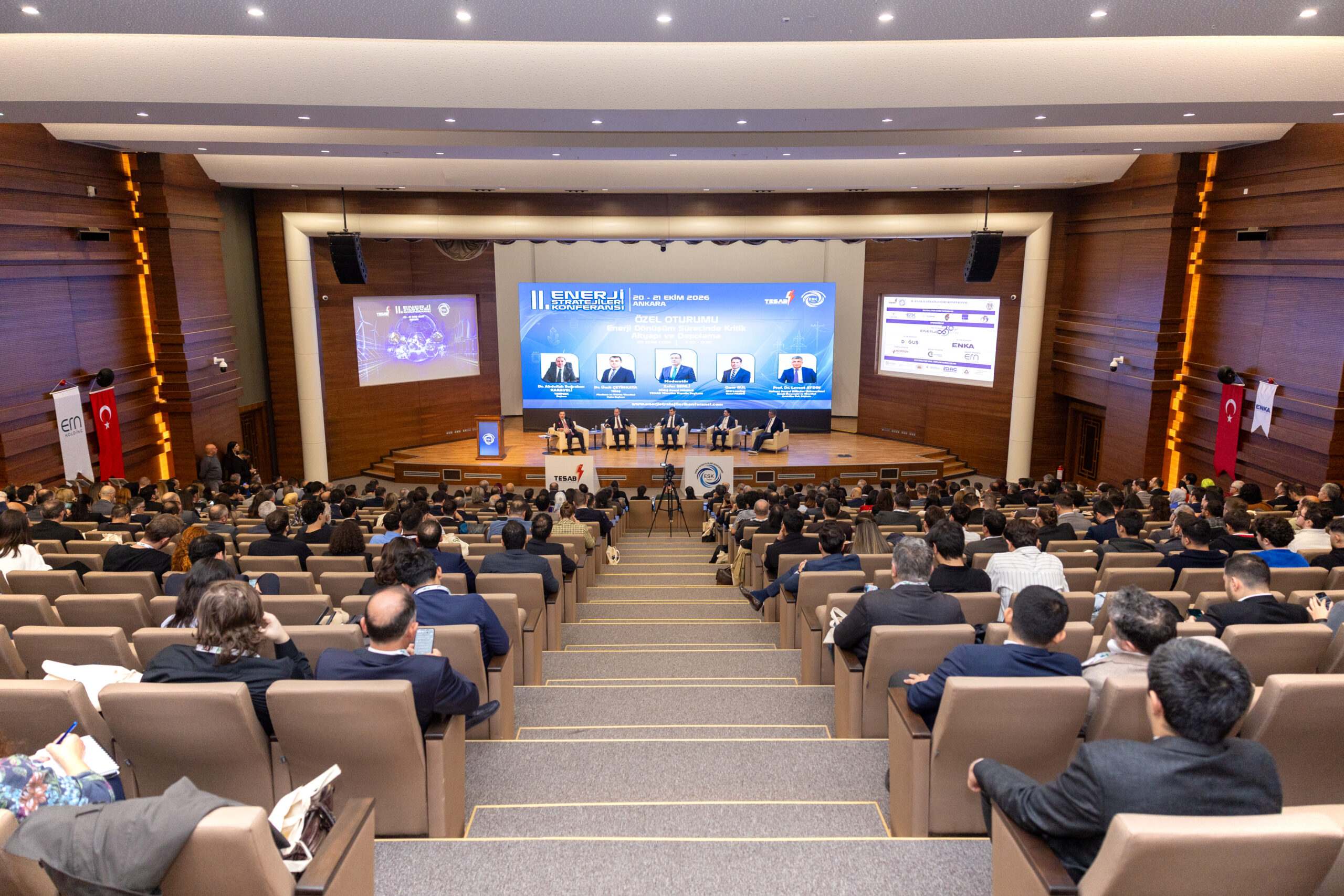
The TÜBİTAK Marmara Research Center (MAM) contributed to the 2nd Energy Strategies Conference, organized by the Turkish Electrical Industry Association (TESAB), by chairing sessions, presenting scientific papers, and showcasing its work on innovative energy technologies.
The 2nd Energy Strategies Conference, organized primarily by TESAB, brought together public and private sector entities and research institutions from the energy sector. Held under the theme “Critical Minerals and Critical Infrastructure,” the conference addressed strategic topics such as the future of energy systems, adaptation to climate change, digitalization, energy storage, and system flexibility.
TÜBİTAK MAM played an active role in the conference’s scientific and technical program. Assoc. Prof. Dr. Özgen Ercan chaired the Climate Risks session, Dr. Doğan Gezer chaired the Storage and Resilience session, and Dr. Ahmet Yüksel participated as a speaker in the Data Centers session.
As part of the conference, Dr. Serkan Buhan, a researcher at TÜBİTAK, presented “Development of a Power Quality Monitoring System for the Turkish Electric Transmission Grid: Twenty Years of Experience,” and Dr. Dilek Küçük presented a paper titled “Classification of Power Quality Events Using Generative Artificial Intelligence Models: Examples from the TEKIS System,” showcasing TÜBİTAK MAM’s robust research and technical infrastructure in power quality monitoring, digital energy systems, and artificial intelligence applications.
Innovative Energy Projects Meet the Industry
The scope of the “Innovative Projects in Hydropower Day,” organized last year in collaboration with TESAB, was expanded this year, resulting in the “Innovative Projects in Renewable Energy Day II.” As part of the event, TÜBİTAK MAM’s ATHOM and YTBS renewable energy forecasting projects, as well as the SUN-TRANS project, were presented, facilitating the sharing of research findings with industry stakeholders.
This collaboration with TESAB has helped align TÜBİTAK MAM’s R&D capabilities in the energy sector with industry needs, increase the visibility of domestic technologies, and strengthen the interaction between research institutions and the energy sector.