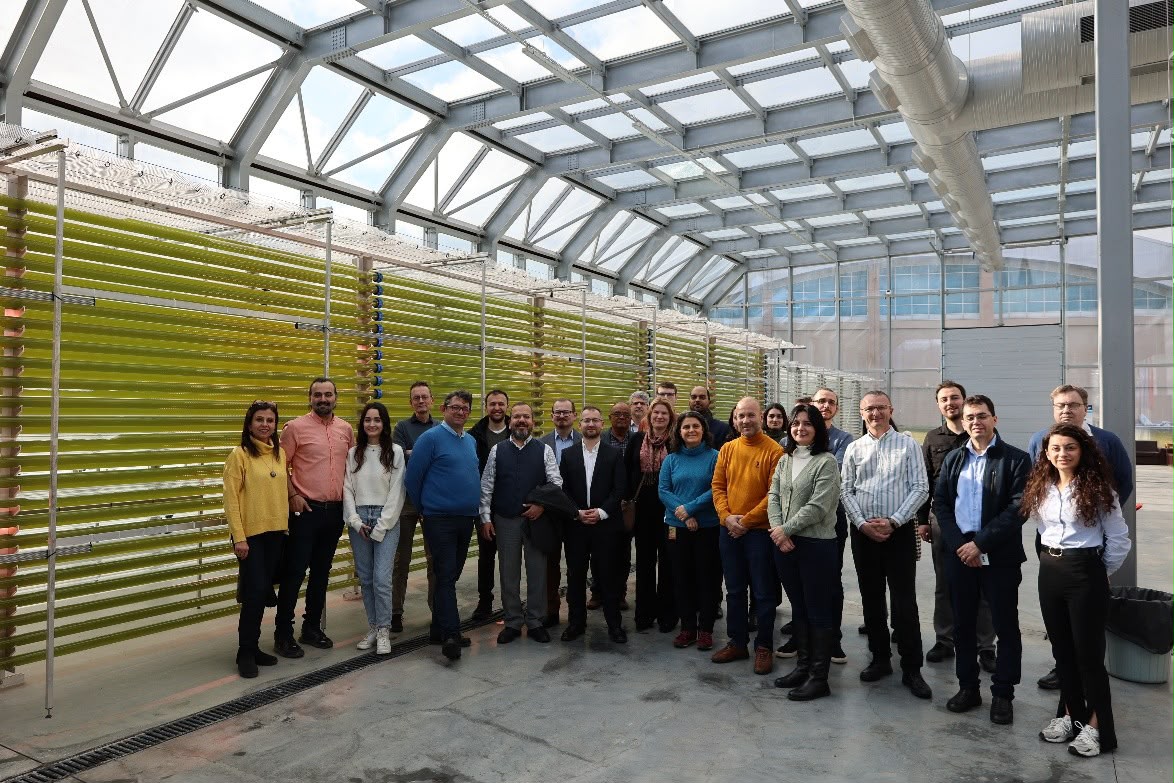
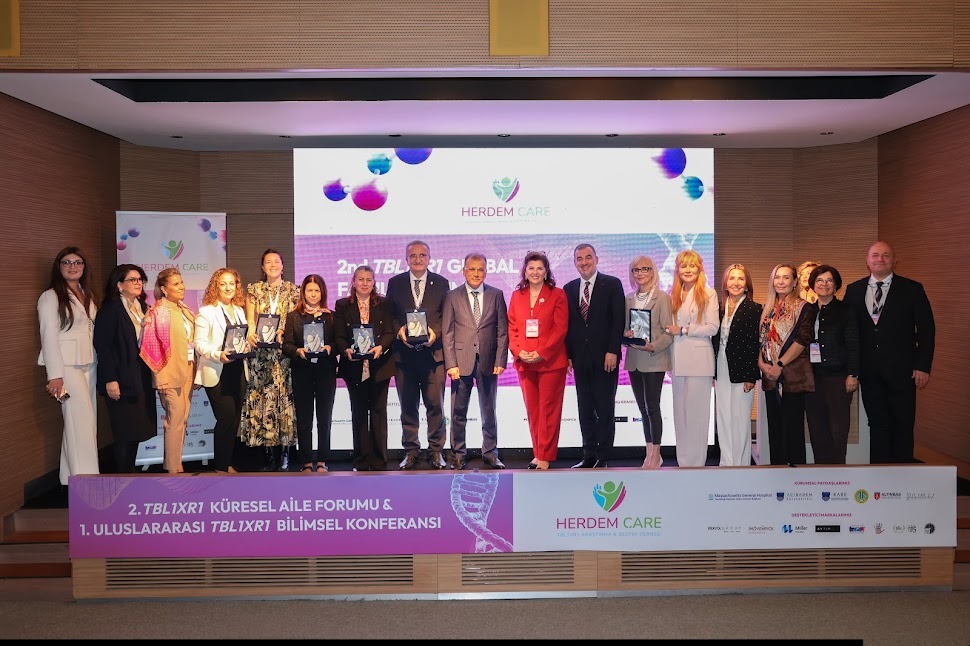
Within the scope of Integrated Management of Hot Spots and Protection of the Black Sea Ecosystem Project (Hot Black Sea), "Training on Planning Environmental Investments in Hot Spots" was organized by TÜBİTAK MAM Environment and Cleaner Production Institute on 28-29 November 2013 in Lares Park Hotel Taksim/ Istanbul. A total of 20 participants from project partners (ICPE-CA -Romania, SURDEP -Bulgaria, FCE -Georgia, Burgas Municipality -Bulgaria), Istanbul Provincial Directorate of Environment, Kocaeli Metropolitan Municipality -İZSU, ITU Environmental Engineering Department, GYTE Environmental Engineering Department and the Project Team of our Institute attended the training.
The opening speech of the project was made by Dr. Selma AYAZ, Deputy Director of ÇTÜE, followed by a presentation by Dr. Vesselina Mihneva introducing the project and explaining why the project was needed. After these presentations, the training program started.
The poster of the project was displayed in the meeting room and relevant documents, booklets, CDs, laptop bags and notebooks were distributed to the participants. At the end of the training course, certificates were presented to the participants.
The content of the training has been developed taking into account the needs of policy makers, investors, operators and their academic assistants and other stakeholders. The overall objective of the training is to promote sustainability in the Black Sea by providing knowledge, through an optimal investment planning approach and understanding the main causes of environmental problems.
The resources used in this training are GPA publications (UNEP/GPA - UNESCO-IHE Train - Sea-Coast GPA http://www.gpa.unep.org/) and the experience of the trainers from previous projects they have conducted and contributed to. The GPA Training Program provides the participants with knowledge on how to identify a wastewater management problem, how to address the problem and how to prepare a proposal to solve the problem. In the training, the following are the projects that the trainers have benefited from their experience and transferred their outputs:
- Preparation of a 'National Action Plan' on Land-Based Pollutants: Phase IV: All Coasts, TÜBİTAK-MAM, Supporting Organization: Republic of Turkey Ministry of Environment and Forestry, 2001-2004.
- Urban Wastewater Management in Turkish Coasts: Redefining Hot Spots and Sensitive Areas: Determination of Waste Absorption Capacities by Monitoring Modeling Methods and Development of Sustainable Urban Wastewater Investment Plans (SINHA), Client Organization: Republic of Turkey Ministry of Environment and Forestry, Partners: METU DBE, DEU DBTE; Supporting Organization: TÜBITAK KAMAG (1007), 2008-2011.
- Zero-M Project, EU Project, 2012. (5032419)
- PREPARED, EU Project, Ongoing (5108602)
The education-related outputs of the second project in the list above are meeting the requirements of the Barcelona and Bucharest conventions regarding the identification of hotspots and ecological planning of urban wastewater treatment investments for coastal settlements in Turkey.
The training provided the participants with concrete information on the topic and analytical tools for selecting, planning and estimating the financing of appropriate and environmentally optimal urban wastewater management systems. The Training Program also focused on two topics: Target-based planning and traditional and innovative approaches to municipal, industrial and agricultural pollution sources.
The content of the training program consists of introduction, analytical tools and applicable information. In the analytical tools section, Prof. Dr. Ülkü Yetiş made presentations on Goal Based Planning and completed the first module of the training. In the following modules 2, 3 and 4, Investment Planning in Urban Wastewater Management: Traditional and Innovative Approaches, Investment Planning Approaches for Industrial Pollution and Investment Planning Approaches for Pollution from Diffuse Sources were presented by Dr. Ahmet Baban, Prof. Dr. Ülkü Yetiş and Assoc. Dr. Kemal Güneş respectively.