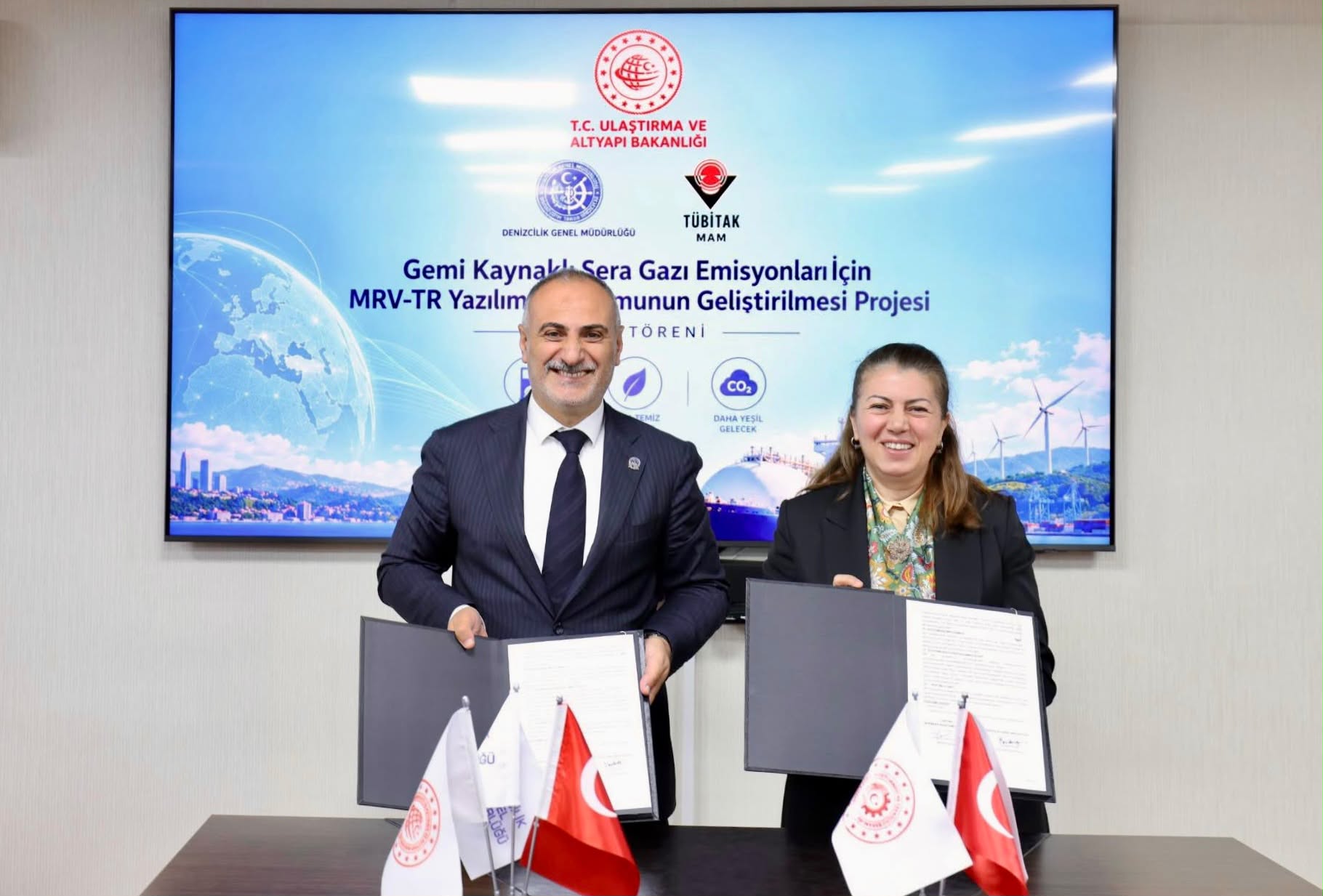
TUBITAK Marmara Research Center (MAM) and Turkish Standards Institute (TSE) signed a cooperation agreement to develop fast and economical methods for halal food inspection. The signing ceremony was held at TÜBİTAK MAM on March 23, 2016 with the participation of TÜBİTAK MAM President Assoc. Prof. Dr. Bahadır Tunaboylu, TSE Secretary General Mehmet Bozdemir and TÜBİTAK MAM Food Institute officials and researchers.
Launched in October 2015, the project will enable faster and more economical detection of swine-derived gelatin and glutamate, as well as l-cysteine, a flour additive produced from human or pig hair, in processed foods. In this way, it is aimed to produce healthier and more ethical food products and to protect both consumers and producers.
The starting point of the project is to increase our competitiveness in this field by ensuring national food safety. While glutamate and L-cysteine analysis cannot be performed in processed foods within the scope of halal food audits in the world with current methods, there are also difficulties in the detection of gelatin, especially in processed foods. By solving these difficulties with the project, it will be possible to develop portable and disposable products that can be used in surveillance and inspection in halal food certifications. The domestic and original methods to be developed with the project will be disseminated by TSE laboratories conducting halal food audits and will be introduced to our food sector.
Scheduled to be completed by the end of 2018, the project will be carried out by researchers from the TUBITAK Marmara Research Center Food Institute in collaboration with TSE, Izmir Institute of Technology and Yıldız Technical University. The project, which has a budget of approximately 1 million TL, is supported by TÜBİTAK 1003 Priority Areas R&D Projects Support Program.