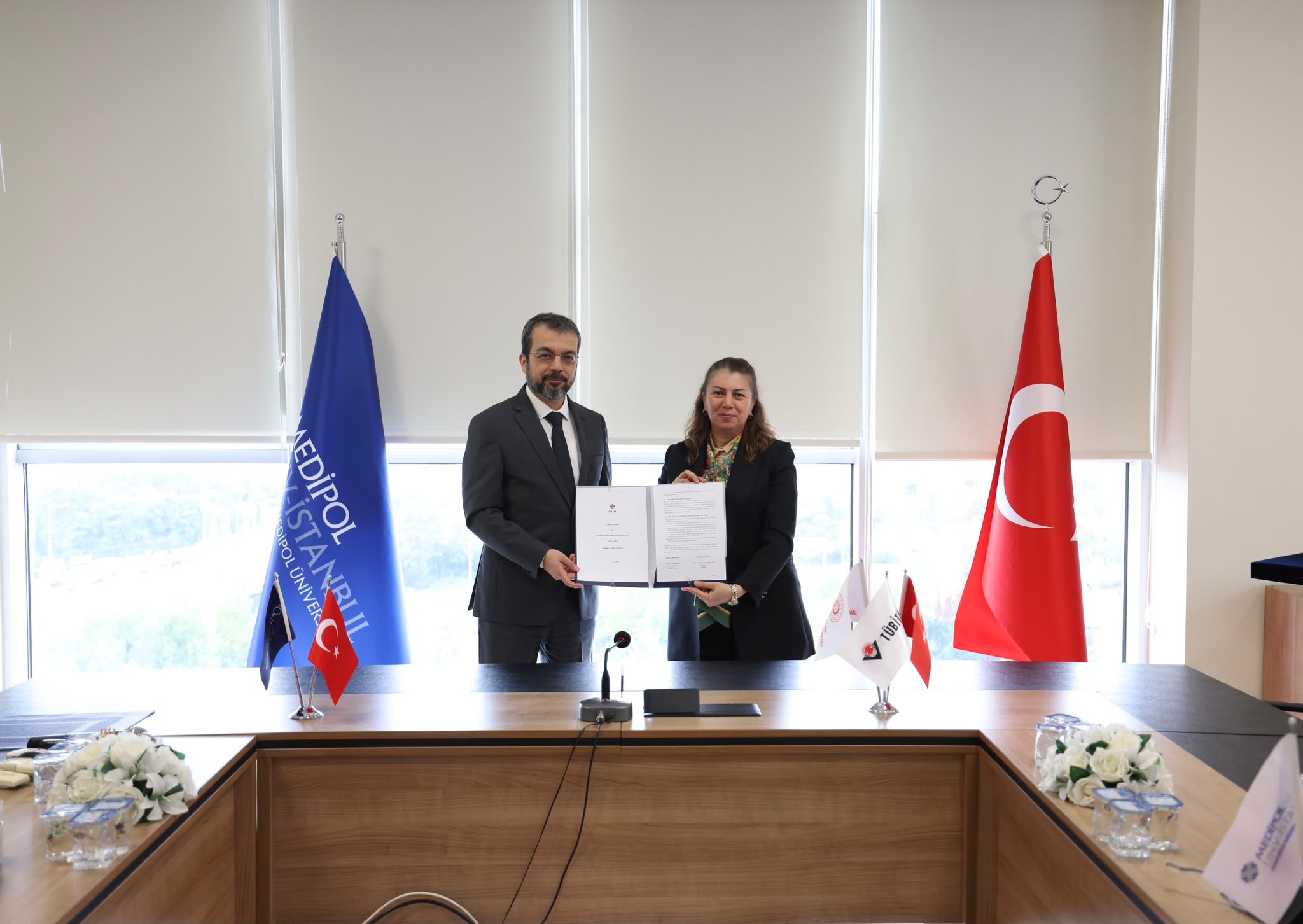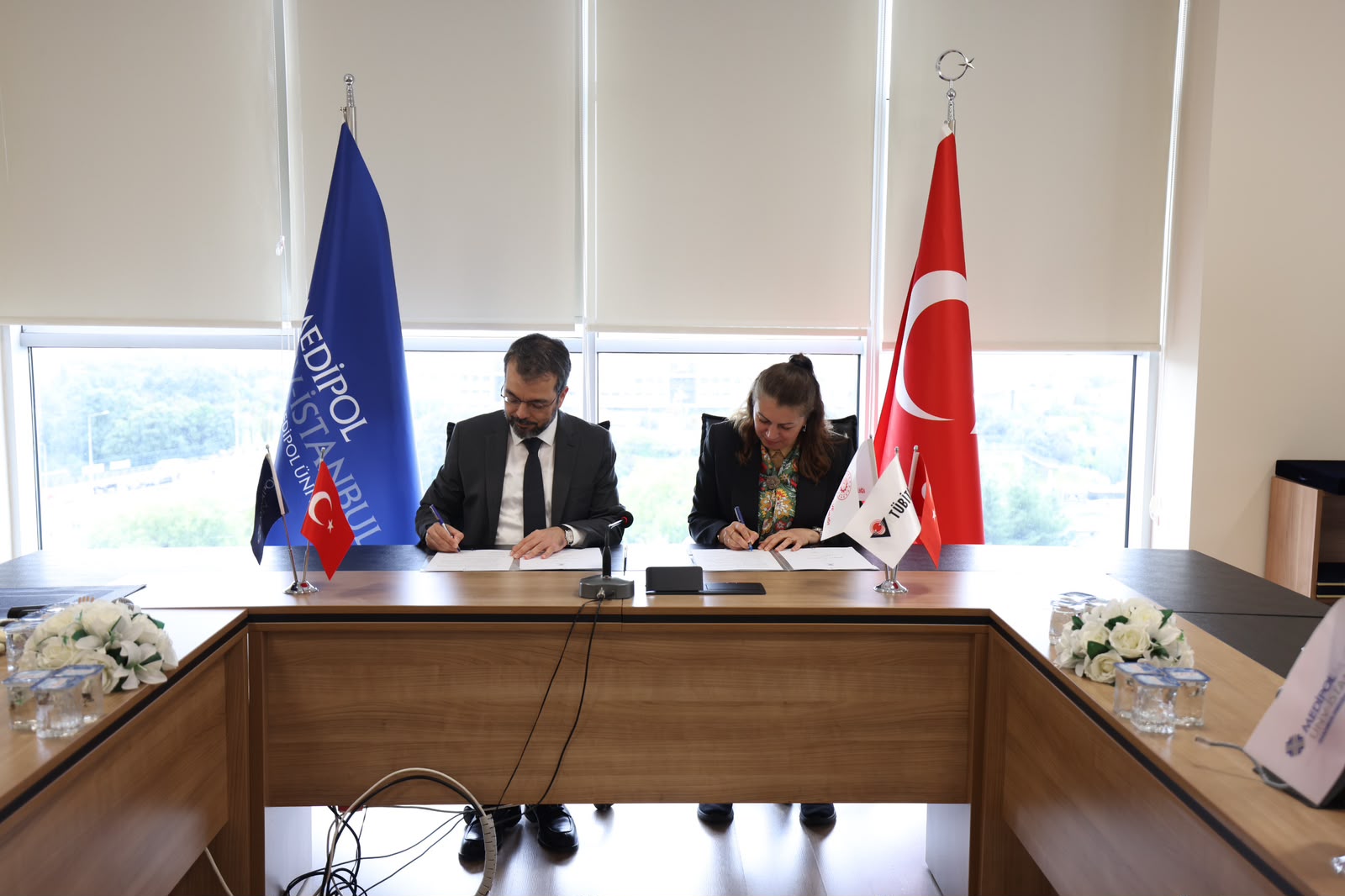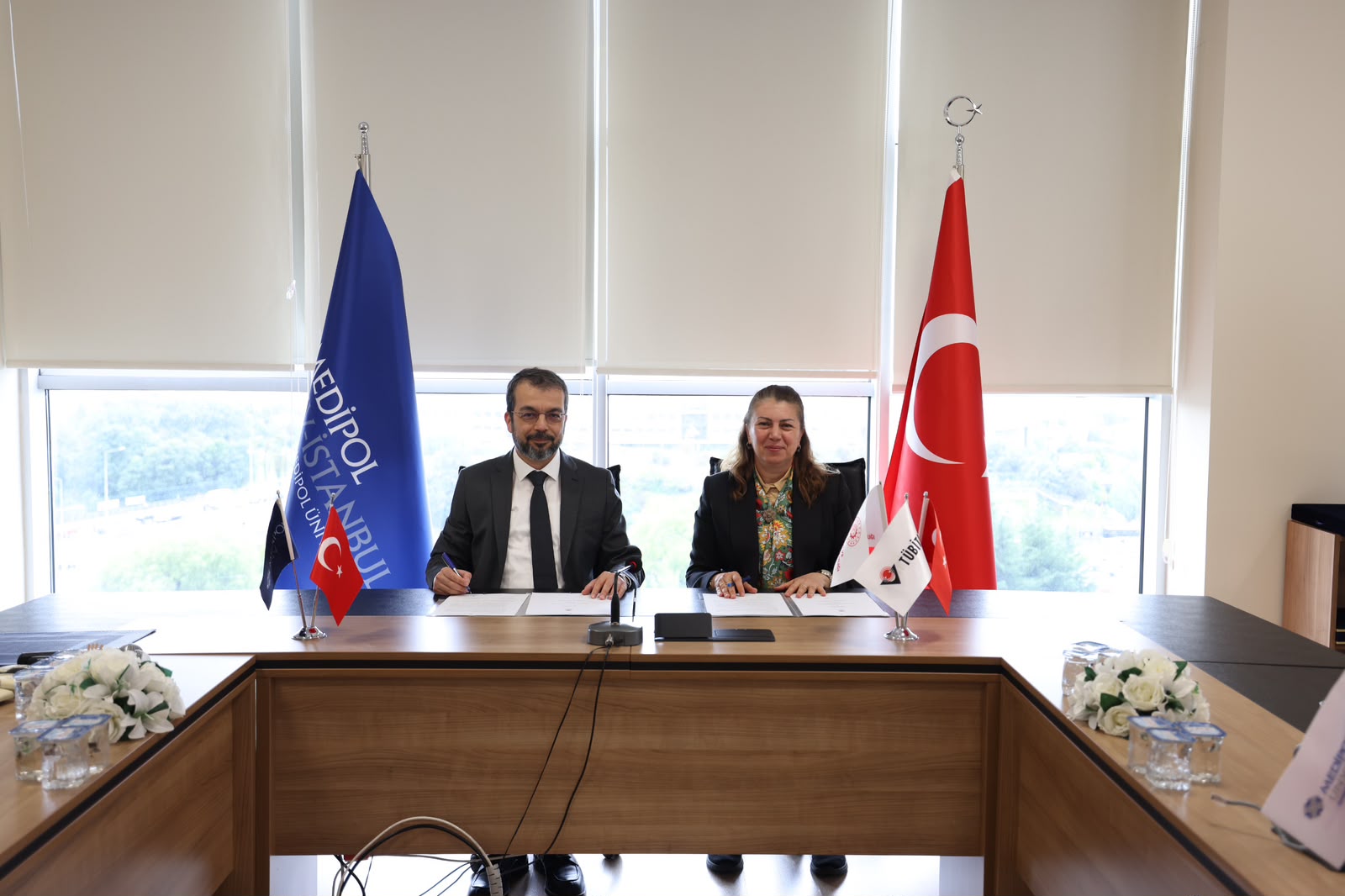
TÜBİTAK MAM and Istanbul Medipol University signed a cooperation protocol to conduct joint research and train qualified scientists.
TÜBİTAK Marmara Research Center (MAM) and Istanbul Medipol University have signed a critical collaboration agreement that will bring their R&D capabilities in the fields of health and technology to the field. Signed by TÜBİTAK MAM President Prof. Dr. Burcu Özsoy and Istanbul Medipol University Rector Prof. Dr. Bahadır Kürşat Güntürk, the protocol covers a wide range of areas, from AI-based digital health to biological threat shields.
Key Areas of Focus for Joint R&D
The signed protocol aims to enable university students and faculty to directly understand the industry’s on-the-ground needs, while going beyond theoretical assumptions to generate concrete solutions to the health system’s operational, clinical, and technological needs through product-oriented applied research. The projects to be carried out jointly by the two institutions will be structured around the following key areas:
- To accelerate clinical decision-support mechanisms in healthcare and improve the accuracy of diagnostic processes, a new generation of digital health solutions will be developed using locally developed artificial intelligence algorithms trained directly on clinical data.
- In light of potential new pandemics and biological threat scenarios that could emerge on a global scale, emergency and logistics capacity plans designed to maintain the national health system’s operational capacity during crises will be developed using scientific simulations.
- While accelerating the integration of high-tech biotechnology products and treatments into the national health system, the long-term cost implications of these processes on public health expenditures will be identified through comprehensive analyses.
- The direct effects of environmental degradation, air pollution, and ecological changes triggered by the global climate crisis on human health can be measured by creating multidimensional risk maps.
- Special performance models will be established to train qualified personnel who will personally manage R&D projects in the field of health technologies; this will create a pool of expert researchers that will reduce Turkey’s dependence on foreign sources for health projects.
The agreement, which combines the expertise of the two institutions, aims to enhance Turkey’s patent strength in health technologies and develop domestically produced solutions that can be transferred to industry through jointly conducted projects.