TÜBİTAK and CERN signed a "Framework Cooperation Agreement" in Switzerland. The agreement aims to strengthen the relations between the two institutions and enable the Turkish research community to benefit more from CERN facilities.
A delegation led by TÜBİTAK Vice President Dr. Orkun Hasekioğlu visited CERN and received information about the ATLAS Experiment, in which a total of 1,800 physicists from 35 countries work to investigate the fundamental forces that make up the universe and the fundamental structure of matter. The members of the delegation also examined the state-of-the-art particle physics detector experiment designed to work as an external module on the International Space Station, and discussed possible areas of cooperation between CERN and TÜBİTAK.
Number of Turkish Students and Researchers at CERN to Increase
During the meetings where the infrastructure and workforce potential of CERN and TÜBİTAK were discussed, efforts to be made to make Turkey a technology leader in the region by bringing the accelerator technology infrastructure to Turkey were also on the agenda. In this context, the establishment of a hadron therapy center, the development of electronic systems and new software, and the creation of new support programs to increase the number of Turkish students and researchers at CERN were discussed.
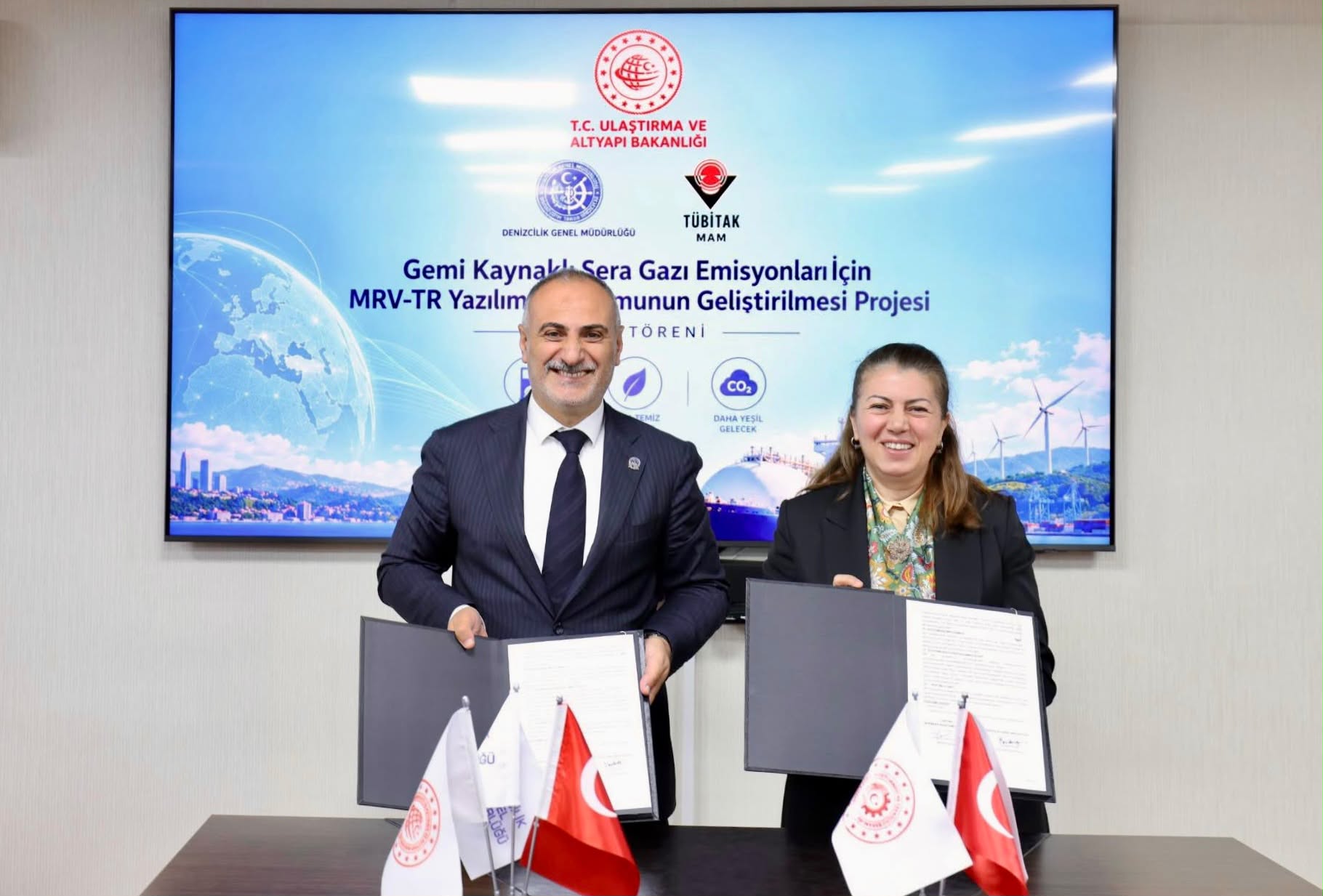
As a result of the talks, a "Framework Cooperation Agreement" was signed between TÜBİTAK and CERN officials. The agreement aims to realize the issues discussed, strengthen the relations between the two institutions and enable the Turkish research community to benefit more from CERN facilities. In the future, TÜBİTAK and CERN are expected to continue their work in cooperation by sharing their expertise within the scope of strategic goals.
The World's Largest Particle Physics Research Laboratory: CERN
The European Center for Nuclear Research was founded in Geneva in 1954. CERN, the world's largest particle physics research laboratory, was built to enable member states to jointly carry out research that they could not carry out with their own budgetary means.
Germany, Austria, Belgium, Bulgaria, Czechia, Denmark, Finland, France, France, the Netherlands, the United Kingdom, Spain, Israel, Sweden, Switzerland, Italy, Hungary, Norway, Poland, Portugal, Slovakia, Romania and Greece are members of CERN, while the United States, Japan and Russia have observer status. As a result of the steps taken, Turkey has also become an "associate member" of CERN.