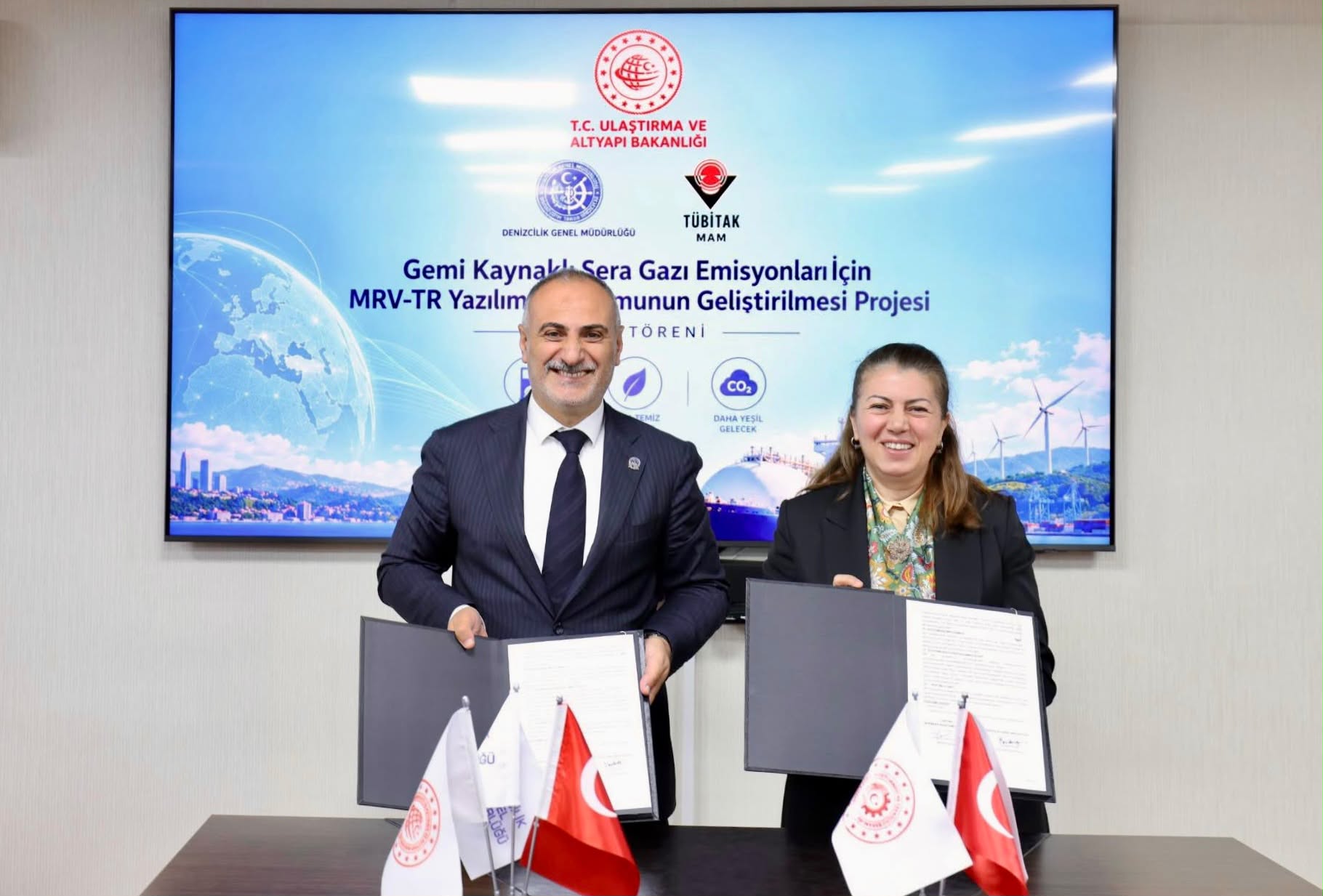
The representative of the "12 High Technology Platform" established in cooperation with industry, universities and the public sector signed a joint protocol. With the 1004-Center of Excellence Support Program, research programs such as circular economy, smart cities, electric vehicle and battery technologies, nanotechnology, food supply security, sustainable agricultural technologies, neurotechnology will operate within the scope of national goals and policies.
The 1004-Center of Excellence Support Program aims to support research programs and projects that are carried out domestically in priority areas determined within the scope of national goals and policies, have traceable targets, scientific quality, and high commercialization potential.
Within the framework of the program, which is carried out with many different stakeholders from industry and academia, it is aimed to specialize the research infrastructures of higher education institutions in cooperation with R&D/Design centers and public R&D units, and to become a center of excellence and transfer the products/technologies they develop to the private sector. In addition, the 1004 program prevents both projects carried out independently or unaware of each other and time loss with public, industry and academia stakeholders.
Accordingly, the program is of great importance in terms of developing domestic and national products and increasing Turkey's competitiveness in international platforms.
SUPPORT GROWS LIKE A DEW
In addition to enabling competition and ensuring the correct and effective use of public resources, the program will provide the necessary mass in priority areas and critical technologies determined within the scope of national goals and policies with the large number of researchers and scholars supported. Within the scope of the 1004 Program, 8 research programs were supported within the framework of the first call and 12 research programs were supported in the second call for strategic goals such as battery pack design and production using advanced technological materials and new manufacturing technologies, development of micro-medical products for chronic complex diseases and cancer, development of value-added advanced nanotechnological materials and systems, and development of new technologies for the infrastructure of smart cities. Within the scope of 8 platforms supported by the 2018 call, 39 organizations; 14 universities, 19 private organizations, 2 public R&D Institutes, 4 6550 research infrastructures took part. 984 researchers and 536 scholars were also supported. Within the scope of 12 platforms supported with the 2021 call, 71 organizations; 34 universities, 29 private organizations, 3 public R&D Institutes, 5 6550 research infrastructures took part. It is foreseen that at least 1279 researchers and 111 fellows will be supported in this platform, which will be newly launched.
TÜBİTAK MAM IS AMONG 1004 EXECUTIVES
Within the scope of the 1004-Center of Excellence Support Program, TÜBİTAK Marmara Research Center is undertaking the task of being the executor. Turkey Photovoltaic Technologies Platform, Diagnostic Kits, Drug Formulations and Vaccine Development Against HPV and Influenza Infections, which threaten public health in our country and in the world, and New Generation 3D Printer Manufacturing Technologies Platform, TÜBİTAK MAM will make great contributions to Turkey's competitiveness in science and technology. The projects carried out since the first day of the 1004 platform are as follows;
NEW GENERATION 3D PRINTER MANUFACTURING TECHNOLOGIES PLATFORM
"1004-Next Generation 3D Printer Manufacturing Technologies Platform" is among the research programs carried out domestically in priority areas determined within the scope of national goals and policies, with traceable targets, scientific quality, and high commercialization potential.
The most important strategic goal of the platform is to use Additive Manufacturing technologies, especially in critical and costly metal parts, and to create performance, cost and competitive advantage in aircraft, helicopter, missile, UAV, satellite and jet engine domestic development projects within the scope of the SSB 2019-2023 Strategic Plan "Gaining Competence in Defense and Security Technologies".
Within the framework of the program carried out with many different stakeholders from industry and academia, "Production of Aerospace Components with Additive Manufacturing", which cannot be procured from abroad, is of great importance in terms of localization of critical flight components and increasing Turkey's competitiveness in international platforms.
With the 8 Research Program projects carried out within the scope of the Platform, in addition to enabling competition in high-priority areas such as "Powder, Bench, Design, Test, Secondary Process, Material Recycling and Qualification for Production with Additive Manufacturing" and ensuring the correct and effective use of public resources, the large number of researchers and scholarship holders supported will provide the necessary mass in priority areas and critical technologies determined within the scope of national goals and policies.
At the same time, this project aims to develop the technology of "ceramic core production by additive manufacturing". The ceramic cores to be obtained for this purpose are aimed to be used in the production of single crystal and/or oriented solidification precision casting parts with work cavities. For this purpose, TÜBİTAK MAM aims to develop a photopolymer-based binder system to enable the production of ceramic cores by domestic facilities, and to prepare the formulation with ceramic powders and support the preparation of cores using a folded SLA type production process with a 3D printer.
TÜBİTAK MAM, which is among the consortium organizations, will make great contributions to Turkey's competitiveness in science and technology by carrying out highly competitive domestic ingot production and characterization studies for new generation super alloy and stainless steel materials for the aviation industry with advanced technology casting methods and advanced characterization infrastructure facilities, and by developing photopolymer-based binder systems.
PLATFORM FOR THE DEVELOPMENT OF DIAGNOSTIC KITS, DRUG FORMULATIONS AND VACCINES AGAINST HPV AND INFLUENZA-INDUCED INFECTIONS THAT THREATEN PUBLIC HEALTH IN OUR COUNTRY AND IN THE WORLD
Human papillomavirus (HPV) is a group of viruses that are very common in the world. HPV 16 and 18 genotypes can cause cancer. Although protection from HPV is essential, it is important to treat HPV before it turns into cancer in cases where HPV is infected.
The aim of this project is to develop nanofiber-gel combination treatment product prototypes for the treatment of HPV-induced warts by combining salicylic acid-loaded bioadhesive gels and nanofibers containing nioli and doxohexaenoic acid (DHA) prepared by electrospinning method.
Within the scope of the platform, it is aimed to provide high concentration localization in the target area with the controlled release of the active substance thanks to the electrospun nanofiber formulations with bioadhesive, biological skin compatible and biomechanical properties to be developed within the scope of the Development of Active Substance Loaded Nanofibers to be used in HPV Induced Wart Treatment.
As in our country, there is no nanofiber-based treatment product for HPV treatment worldwide. The fact that the controlled release of the active substances in the formula will be targeted to the local area, the use of auxiliary substances that will create a synergistic effect and the selected polymers with antiviral activity will strengthen the synergistic effect constitute the important innovative aspects of the project.
PLATFORM FOR THE DEVELOPMENT OF BIOMARKERS AND ADVANCED TECHNOLOGICAL WARNING SYSTEMS FOR THE DIAGNOSIS, TREATMENT AND MONITORING OF DISEASES THAT CAUSE NEURONAL DAMAGE
Development of Electrochemical Impedance Based Biosensor System Components for Multiple Biomarker Detection for Early Diagnosis of Alzheimer's Disease
Within the scope of the project, it is aimed to develop a biosensor system prototype for the detection of Alzheimer's disease approximately 15 years before the occurrence of the disease through its markers in the blood. Peptides that will specifically recognize Amyloid beta and GFAP proteins, which are the most important biomarkers of the disease, will be developed and an electrochemical-based biosensor system prototype will be produced on these probes. The ultimate goal of the study is to develop a portable product prototype that can diagnose Alzheimer's disease, which is a disease that affects the world more and more every day due to the increasing elderly population, at an early stage and in a sensitive way.
Development of Unique Molecules Specific to Epilepsy, ALS and Migraine Biomarkers that can be used in Diagnosis, Screening, Imaging and Treatment
The project will develop diagnostic and therapeutic agents for Epilepsy, ALS and Migraine diseases. GABA for EpilepsyA peptide-based treatment agents and diagnostic probes will be developed for sub-receptors, HMGB1 protein for Migraine, and PNA (peptide nucleic acid) based treatment agents and diagnostic probes for ALS and Epilepsy diseases. In this study, both genetically targeted such as DNA and RNA and protein targeted treatment and diagnostic molecules will be developed;
- Electrochemical, portable biosensor prototypes,
- Diagnostic kits for diagnosis and monitoring
- Candidate drug molecules for treatments of related diseases
will be developed.
TR.AQUA PLATFORM FOR INNOVATIVE AND SUSTAINABLE PRACTICES IN AQUACULTURE WITHIN THE FRAMEWORK OF FOOD SUPPLY SECURITY
Development of PNA/AMP Based Impedimetric Electrochemical Biosensors for the Detection of Pathogens in Fish Farming
Aquaculture products, which have an important place in nutrition due to their high nutritional value, can be exposed to existing and acquired pathogens. The project will develop peptide nucleic acid (PNA) and antimicrobial peptide (AMP)-based biosensor systems that can detect pathogens, which are highly harmful in fish farming, in situ, in real time and with high sensitivity. Thus, it will be possible to detect pathogens in a timely manner and with high sensitivity, and will make a great contribution to stopping epidemics in fish farming in our country by taking appropriate measures and reducing possible economic losses.
Development of a QR Code Based Sensor System for Freshness Control of Fish on the Shelf
According to experts, around a third of food is wasted along the supply chain. Expiration dates can sometimes cause confusion and misunderstanding by consumers. At the same time, expiration dates are not a good indicator of whether food has been stored properly, as they may not reflect the reality as a result of storage conditions such as temperature, humidity, etc. In this context, the project aims to develop a colorimetric-based food spoilage sensor that can be read with a QR code for the detection of volatile chemicals formed in fish products that deteriorate very quickly in order to increase the quality and safety of fish products. The QR code to be developed will be a system that can be detected via mobile phones and thus will be able to show consumers in a practical way whether there is any food spoilage or improper storage. Thanks to the prototype to be developed, it will be possible to detect whether the products are spoiled or not directly at home or in the market without the need for expensive sensor hardware.
ODTU MEMS MICROMEDICAL TECHNOLOGIES PLATFORM (MAESTRO)
As TÜBİTAK MAM, we are involved in the 1004 MAESTRO platform with two projects. The first of these projects aims to develop a MEMS-based platform for the detection of restenosis after stenting. Within the scope of the project, a passive capacitive pressure sensor will be developed and integrated into existing stent structures. It is aimed that this structure will be able to communicate with RF-based technologies from outside the body and provide information about the status of restenosis.
Another project in the platform is "MEMS Structured Sensor Systems for Detecting and Monitoring Cardiovascular Disease Parameters from Body Fluids (KARMEMS)". Within the scope of the relevant project; it is aimed to develop portable systems that aim to detect sudden heart attack instantly and on-site. In this context, MEMS-based microfluidic structures and sensors that enable the detection of markers that identify heart attack will be developed. The aim is to detect Acute Coronary Syndrome from blood and saliva in order for the system to produce a rapid and on-site response. The project involves many researchers from different disciplines from TÜBİTAK MAM, Acıbadem University and Gebze Technical University.
NEW GENERATION BIOMATERIALS TECHNOLOGIES RESEARCH NETWORK PLATFORM FOR HEALTHY LIVING
Within the scope of the platform, it aims to "acquire innovative technologies that will be used to obtain technical know-how for the biomaterials of the future for a healthy life". The consortium formed for this purpose includes 5 universities, a research infrastructure within the scope of Law No. 6550, 3 R&D center institutions and organizations, one of which is public and two of which are private sector, and companies from the private sector that have declared their intention for the commercialization phase of the outputs. In this context, 4 separate projects have been initiated.
Our first project in the platform, "Development of Functional Biomimetic Nanofibrillar Hydrogels for Tissue Engineering, Regenerative Medicine and Infection Therapy", aims to develop multifunctional biomimetic hydrogels and hydrogel-based bioinks in natural biopolymer-based gel, granular and microparticle forms with properties such as stimulus-response and electrical active.
Another project in the platform is "Development of Nanocomposite Biomaterials for Hard Tissue Repair". The project aims to develop composite tissue scaffolds that can physically, chemically and electrically mimic bone structure by utilizing the high bioactivity of bioactive glass and the electricity generation potential of piezoelectric ceramics and to determine the effectiveness of bone regeneration.
Within the scope of our project "Development of Peptide-Bound Gelatin Polymers for Brain Targeting", the development, synthesis and characterization of peptides that can cross the blood brain barrier and target brain tumors will be carried out.
Within the scope of the "Peptide-Monemer, Peptide Raft Agent, Self-Assembled Peptide, Short Sequence Peptide Synthesis" project, which is our last project in the platform, the development, synthesis and characterization of peptides and peptide polymer combinations with the requested properties for in-body soft robot application will be carried out.
Production of Self-Assembled Peptide Based Artificial Skin Graft
The project aims to develop artificial skin grafts with nanofibrillar peptide-based functional biomimetic hydrogels that mimic the extracellular matrix (ECM) structure for tissue engineering, regenerative medicine and infection treatment. Artificial skin graft prototypes will be produced with biocompatible natural polymer and self-assembled peptides modified with antimicrobial peptide (AMP) using 3D printing method. Some of the project objectives include the development of prototype biomaterials that can improve the treatment processes and quality of life of patients after grafting, contribute to the prevention of infections and be promising for chronic wound healing and regeneration of many other tissues thanks to the bioactive properties of peptides that can support skin regeneration.
VALUE-ADDED ADVANCED NANOTECHNOLOGICAL MATERIALS AND SYSTEMS FOR A SUSTAINABLE CIRCULAR ECONOMY (LIGNONANO)
Today, technologies related to raw materials and inputs, which are directly related to the added value created in production and manufacturing sectors, are undergoing a radical transformation with sustainability and circular economy approaches. In this transformation, which is based on the use of renewable raw material resources, strategies and business models based on innovative growth with zero-waste targets and minimized environmental impacts come to the fore.
Within the framework of 1004_LIGNONANO Platform; as TÜBİTAK MAM, we are involved in the following projects under the leadership of APYK 3.
Development of Value Added Products from Lignocellulosic Biomass; The project aims to develop intermediate products based on lignocellulose components such as functional macromolecules; epoxy functional macrostructures; UV curable epoxy functional macrostructures and lignocellulose based fibers and target products such as UV cured epoxy resins; epoxy resin films with flame / fire retardant properties and recyclable plaque materials with lignocellulose fiber additives.
DEVELOPMENT OF ADVANCED CARBON-BASED MATERIALS FOR ELECTROMAGNETIC SHIELDING
The project, proposed in partnership with TÜBİTAK MAM, Marmara University, SUNUM, FNSS and NUROL Teknoloji A.Ş., aims to develop carbon-based advanced materials for electromagnetic shielding and antenna/electrode production suitable for 5G technology using green technologies from lignocellulosic biomass, a sustainable resource widely available in our country.
SENSOR AND CONTROLLED RELEASE SYSTEMS FOR SUSTAINABLE AGRICULTURE
CONTROLLED NUTRIENT RELEASE WITH MICRO/NANOSTRUCTURES AND NANOFORMULATIONS
It is aimed to develop smart fertilizer systems with controlled / delayed release using lignocellulosic materials obtained from agricultural wastes and to produce solutions that offer high efficiency and low environmental risks in plant nutrition. Thus, by adopting sustainability and circular economy approaches, what comes from the soil will be transformed into value-added advanced materials and returned back to the soil. Within the scope of the project, by adopting a holistic approach to plant nutrition, it is aimed to develop controlled release micro-element fertilizer formulations to be applied foliarly to plants, superabsorbent polymer-based macro-element fertilizer formulations with high water retention properties to be applied to plants through soil, and nanocomposite gel-based micro-element fertilizer formulations with delayed/slow release properties to be applied to plants through soil.
DEVELOPMENT OF A PROBE FOR REAL-TIME DETECTION AND MONITORING OF NITRATE CONCENTRATIONS FOR AGRICULTURE
Excessive and unconscious use of chemical fertilizers leads to inefficiency of agricultural lands and pollution of surface and groundwater, especially with nitrate. Over-application of fertilizer causes financial losses in agricultural terms, while under-application leads to yield loss. In both cases, agricultural enterprises and farmers suffer economic losses. In addition, fertilization causes nitrate pollution of surface and groundwater through the transport of nutrients to the lower parts of the soil profile.
With the nitrate sensor proposed within the scope of the project; It will be developed by using the substrate produced from lignocellulosic waste biomass and graphitic carbon to be produced from this biomass. This nitrate sensor to be developed is very important in terms of its contribution to the purpose of the platform, our country and the environment, as it will be used for monitoring nitrate in the soil within the scope of the green agreement. With a prototype device consisting of sensors that will be created by coating the chips to be produced from lignocellulosic waste with nitrate-sensing functional nanomaterials, real-time monitoring of the limit concentrations of nitrate ions in the soil and in-field deployability will be possible. In addition, a platform will be developed that can provide farmers with valuable data on the amount of nutrient availability for crops, prevent over-fertilization by optimizing fertilizer application, and contribute to the reduction of nitrate pollution in water resources and nitrous oxide emissions, as well as central control if desired.
DEVELOPMENT OF LIGNOCELLULOSIC BASED OLED DISPLAY
With the use of lignocellulosic biomass as a carbon source, it is aimed to develop passive matrix OLED displays on transparent and flexible substrates produced from cheap and sustainable lignocellulosic resources, where carbon dot-based nanoemitters with high quantum efficiency, which can radiate in different color emissions, are used as diodes.